
Best Well Water Saltless Water Softener – Soft Water Solution
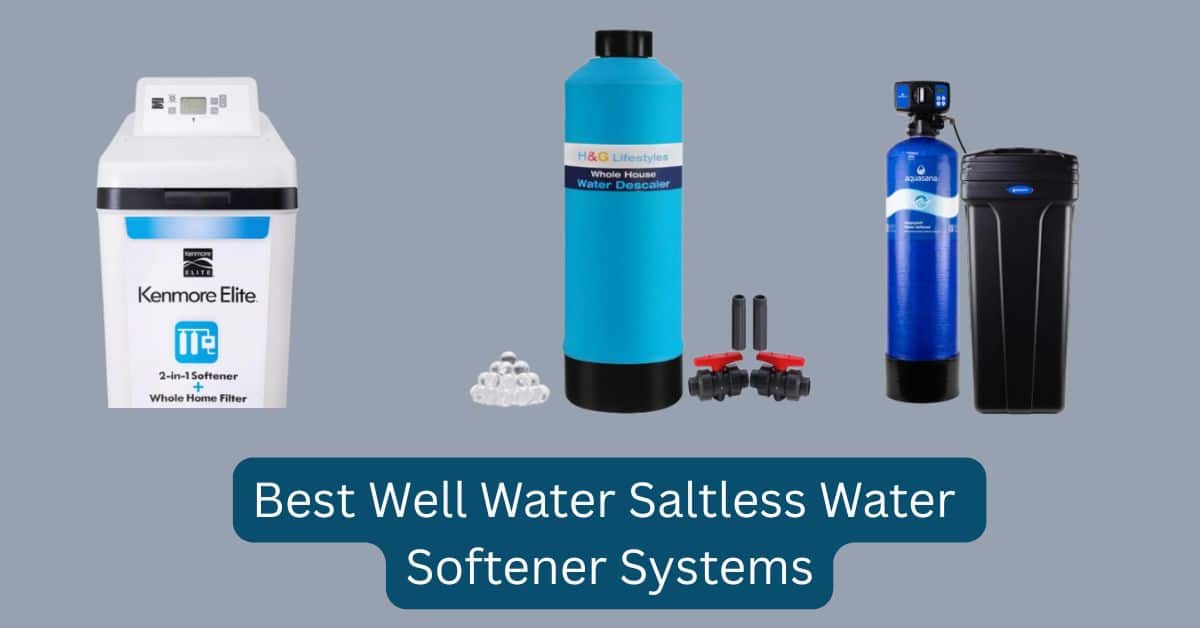
Best Well Water Saltless Water Softener provides soft water without salt. Protect plumbing and improve water quality naturally.

Affiliate disclosure: Some links on this page are affiliate links. If you click an affiliate link and make a purchase, I may earn a small commission at no extra cost to you. I only recommend products I believe are useful to readers.
A saltless conditioner changes how calcium and magnesium form scale but leaves both minerals in the well water. That makes it a low-maintenance scale-control option, not a direct substitute when the goal is to lower a hardness reading or remove iron.
Traditional water softeners use salt to remove these minerals, but they add sodium to your water and require regular maintenance.
Saltless water softeners work differently than salt-based systems. They don’t remove minerals but instead change their structure so they don’t stick to surfaces or cause the typical hard water problems.
This process is called conditioning or crystallization. Saltless systems need less maintenance and don’t add sodium to your drinking water.
The most important factors to consider are the system’s flow rate, the grain capacity it can handle, and whether it fits your home’s plumbing setup. You also need to think about installation requirements and ongoing maintenance costs.
I compared manufacturer specifications, flow-rate claims, filter media, maintenance requirements, and published product information to identify strong options for different well water needs.
Best Well Water Saltless Water Softeners
The picks below are organized using published specifications, stated performance claims, maintenance demands, and fit for different household use cases. I focused on systems marketed for scale control, conditioning method, and whole-house fit without routine salt use.
H&G Lifestyles Water Descaler

Best for homeowners seeking a maintenance-free alternative to salt-based softeners with well water under 18 grains hardness.
Key specs: the listing states a 700,000-gallon capacity; flow rate up to 7 GPM; a 27”-tall food-grade polyphosphate unit (H&G Lifestyles whole house water descaler – manufacturer’s listing)
Pros
- Six years of protection without salt refills or chemical maintenance
- Designed for both well water and city water systems
- Maintains full water pressure even at maximum 7 GPM flow rate
Cons
- Won’t remove iron, sulfur, or reduce total dissolved solids
- Only suitable for water hardness under 18 grains per gallon
- Some users report initial TDS increases during break-in period
Aquasure Harmony Series Water Softener

Best for larger homes that need reliable whole-house water treatment with the convenience of automatic controls.
Key specs: 48,000-grain capacity; maximum flow rate listed at 12 GPM; 10” × 62” fiberglass-lined polyethylene tank; digital metered control head; 5-year extended manufacturer warranty when the product is activated online within 60 days (Aquasure Harmony Series 48,000 grain softener – manufacturer’s listing)
Pros
- Digital display makes programming and monitoring water usage simple
- Built-in pre-filter removes chlorine and other contaminants along with hardness
- Strong construction holds up well over years of daily use
Cons
- Heavy weight makes installation challenging without help
- Takes up significant floor space in utility rooms
- Higher upfront cost compared to basic softener models
WaterBoss Whole House Descaler

Best for households dealing with mild to moderate water hardness who want a low-maintenance solution.
Key specs: rated for 600,000 gallons or 6 years, whichever comes first; flow rate up to 15 GPM; 18” tall × 4.5” diameter cartridge; 1-year manufacturer warranty (WaterBoss – Whole House Descaler)
Pros
- Requires zero maintenance once installed with no salt refills or electricity needed
- Built to last with quality engineering and a solid 6-year lifespan
Cons
- Only prevents scale buildup rather than actually softening the water
- Limited effectiveness on water harder than 15 grains per gallon
- Cannot handle high iron content or sulfur issues common in well water
AO Smith Whole House Descaler

Best for homes with moderate water hardness that want a low-maintenance solution without salt or electricity.
Key specs: rated for 600,000 gallons or 6 years; 6-year limited warranty (A. O. Smith – AO-WH-DSCLR owner’s manual, PDF); no cleaning, backwashing, salt bags or electricity required; 76 × 23.5 × 23.5 cm (about 30” tall) cabinet (A. O. Smith AO-WH-DSCLR manufacturer’s listing)
Pros
- No ongoing costs for salt, chemicals, or electricity after installation
- Simple setup that works for six years without maintenance or backwashing
- Effective scale prevention in pipes and appliances with both well and city water
Cons
- Does not actually soften water or remove the minerals that cause hardness
- Only works with water hardness levels under 15 grains per gallon
- Cannot handle iron, sulfur, or high mineral content water
Tier1 Salt-Free Water Conditioner

Best for homeowners who want scale prevention without the hassle of salt.
Key specs: rated for 600,000 gallons or 5–6 years (Tier1 – Salt-Free Systems); flow rate 8 GPM (Tier1 – Salt-Free Systems); the listing states an 8” × 37” tank with 1” NPT fittings (Salt-Free Whole House Water Conditioner, 8 GPM TAC – DiscountFilterStore listing); the listing states a 10-year limited warranty (Salt-Free Whole House Water Conditioner, 8 GPM TAC – DiscountFilterStore listing)
Pros
- Works continuously without any maintenance or salt refills needed
- Actually removes existing scale buildup from pipes and fixtures over time
- Simple installation with no electrical connections or drain lines required
Cons
- Water still feels hard since minerals aren’t removed from the water
- Best matched to moderate hardness levels and the water conditions listed by the manufacturer
- Faucet screens get clogged occasionally as old scale breaks loose
Aquasana SimplySoft 40,000 Grain Softener

Best for larger families who want to reduce salt usage and enjoy consistently soft water throughout their home.
Key specs: 40,000-grain capacity; peak flow rate 15.5 GPM; maximum operating pressure 125 psi; IAPMO certified to NSF/ANSI 44 and CSA B483.1; 5/10-year limited warranty (Aquasana – SimplySoft 40,000 Grain Water Softener)
Pros
- Aquasana states the system uses 50% less salt and 28% less water than conventional softeners (Aquasana – SimplySoft 40,000 Grain Water Softener)
- Designed for both city and well water sources
- Clear LCD display makes monitoring and adjustments simple
Cons
- Takes up significant basement or utility room space
- Requires separate pre-filter purchase for best well water performance
- Initial setup can be tricky without following instructions exactly
Kind Water Salt-Free System

Best for well water homes that want filtered water without salt.
Key specs: the manufacturer states a 15 GPM flow rate; reduces scale buildup by 88%; filters 95% of sediment; addresses 155+ contaminants (Kind Water Systems – Whole House Salt-Free Water Softener and Filter Combo)
Pros
- Installation takes just a few hours with basic plumbing skills
- Combines filtration media and salt-free conditioning features in one package
- Requires minimal upkeep compared to traditional salt systems
Cons
- Hard water spots still appear on glass and fixtures
- Some users report no taste improvement or worse flavor
- Higher upfront cost than basic filtration options
Kenmore Elite 520 Hybrid Water Softener

Best for households that want a combined softener and whole-house filtration unit.
Key specs: 31,000-grain capacity; maximum flow rate 8 GPM; operating pressure 20-125 psi; handles hardness up to 100 gpg and clear water iron up to 3 ppm; 20.5” × 15” × 48”; 1-year full warranty (3 years electronics, 10 years tank) (Kenmore Elite 520 hybrid softener – manufacturer’s listing)
Pros
- Combines water softening and carbon filtration without needing separate systems
- Smart technology automatically adjusts salt usage based on your water habits
- No filter replacements needed since the system cleans itself during regeneration
Cons
- Takes up more floor space than basic softeners due to its dual function design
- Installation can be tricky if you’re replacing an older model with different height requirements
- Digital display requires power connection which adds complexity compared to simple mechanical units
Clean and Protect Salt Pellets

Best for traditional salt-based softeners that need bulk pellet refills.
Key specs: Morton Clean and Protect pellets; 40 lb bags; Morton recommends adding 2 bags every 2 months, keeping the tank at least half full; pellet format formulated to reduce bridging and mushing and help keep the softener’s resin tank clean (Morton Salt – Clean and Protect Water Softener Salt Pellets)
Pros
- Dissolves evenly without bridging or mushing issues
- Convenient bulk packaging with easy-carry handles
- Compatible with both well water and municipal systems
Cons
- Uses traditional salt method instead of saltless technology
- Heavy 40-pound bags require physical strength to handle
- Requires ongoing salt replenishment and maintenance
H&G Lifestyles 24,000 Grain Water Softener

Best for well water owners who need reliable softening performance and don’t mind occasional maintenance tasks.
Key specs: the listing states a 24,000-grain capacity; a 700,000-gallon rated capacity; 5A food-grade cation resin; reduction of 99.3% calcium and 99.5% magnesium (H&G Lifestyles whole house water softener – manufacturer’s listing)
Pros
- Marketed as a high-capacity softener for reducing hardness minerals in whole-house use
- Marketed for both RV and whole-house applications with published flow-rate support
- Uses regenerable resin that extends the system’s useful life
Cons
- May require frequent regeneration cycles with very hard well water
- Packaging issues can cause shipping damage to the tank
- Performance drops noticeably when processing large water volumes
Morton Clean and Protect Salt Pellets

Best for traditional salt-based softeners that use pellet refills.
Key specs: Morton Clean and Protect pellets; 40 lb bags; Morton recommends adding 2 bags every 2 months, keeping the tank at least half full; pellet format formulated to reduce bridging and mushing and help keep the softener’s resin tank clean (Morton Salt – Clean and Protect Water Softener Salt Pellets)
Pros
- Dissolves completely without creating clumps or bridges in the tank
- Easy-carry bags with sturdy handles make refilling simple
- Works reliably with all major water softener brands
Cons
- Only compatible with salt-based systems, not saltless water conditioners
- Requires regular refilling which means ongoing maintenance
- Heavy bags can be difficult for some people to lift and pour
Tier1 Compact Water Softener

Best for buyers who want a conventional softener with a simpler installation profile.
Key specs: 32,000-grain capacity; 1 cu ft resin; maximum flow rate 18 GPM; operating pressure 20-87 psi; 10” × 40” tank; 75 lb; 10-year limited warranty on the tank, 1-year on the control valve (Tier1 32,000 grain compact water softener – manufacturer’s listing)
Pros
- Installation process is straightforward with clear instructions that make DIY setup manageable
- Control valve automatically measures water usage and only regenerates when needed
- Compact design fits well in tight spaces while still handling 32,000 grains
Cons
- Resin beads may lose effectiveness after just a few months of use
- Instructions don’t explain all control valve features in detail
- Some users report complete loss of softening ability after 3,000 gallons
Buying Guide
Well owners often choose a saltless system for reasons beyond softening performance: as the FAQ below notes, these units don’t discharge brine into a septic system, which matters if your property relies on a septic drain field that years of salt-based regeneration can otherwise damage. The trade-off is a different maintenance schedule — saltless conditioning media typically needs replacing every 3 to 5 years rather than a salt refill every couple of months, but the pre-filters that protect that media from well-water sediment still need changing every 3 to 6 months. Within saltless technology, the system types below break down further: Template Assisted Crystallization changes mineral structure for moderate hardness, electromagnetic units are the easiest to install but weaker on very hard water, and catalytic media systems typically run longer between service visits.
Water Testing Requirements
Record hardness in grains per gallon or parts per million and test for iron before choosing the technology. Moderate hardness can fit TAC conditioning, while very hard water or a need to remove minerals points away from a scale-control-only system.
Flow Rate and Capacity
Flow rate has to cover simultaneous demand: the table starts at 6-8 GPM for one or two people, rises to 8-12 GPM for three or four, and reaches 12+ GPM for larger households. Daily capacity is a separate limit, ranging here from 300 to more than 800 gallons.
| Household Size | Recommended Flow Rate | Daily Capacity |
|---|---|---|
| 1-2 people | 6-8 GPM | 300-500 gallons |
| 3-4 people | 8-12 GPM | 500-800 gallons |
| 5+ people | 12+ GPM | 800+ gallons |
Installation and Maintenance
Confirm whether the selected conditioner needs power or a drain and leave service space around its pre-filter. The conditioning media described here lasts about 3-5 years, but sediment-protecting pre-filters still need attention every 3-6 months.
System Types to Consider
Template Assisted Crystallization changes mineral structure for moderate hardness without removing it. Electromagnetic units are simpler to install but are presented here as weaker on very hard water, while catalytic media offers longer intervals between service visits.
Frequently Asked Questions
Saltless water softeners offer unique benefits for well water treatment through different technology than traditional salt systems. These systems address common concerns about maintenance costs, environmental impact, and effectiveness with various minerals found in private wells.
What does a saltless conditioner change—and what remains in the well water?
A saltless conditioner changes scale-forming behaviour without consuming salt or discharging brine. Calcium and magnesium remain in the water, so the system can reduce deposits while leaving a hardness test essentially unchanged.
These systems don’t discharge brine water into septic systems. Well water users with septic tanks avoid potential drain field damage.
There is no salt level to monitor or refill. The system runs without routine brine-tank maintenance.
Saltless units preserve beneficial minerals in well water. Calcium and magnesium stay in the water for drinking.
How do saltless water softeners work to treat hard well water?
Saltless water softeners use template assisted crystallization technology. The system changes how minerals behave without removing them from water.
Hard minerals like calcium and magnesium form tiny crystals. These crystals don’t stick to pipes and appliances as easily.
The conditioning media inside the tank treats water as it flows through. The goal is conditioned water that reduces scale buildup.
Water keeps its mineral content but loses the harmful effects. Soap works better and fixtures stay cleaner.
Can a saltless water softener effectively remove iron and other minerals from well water?
Saltless water softeners don’t remove iron from well water. Separate iron filtration is usually needed when iron is present.
These units condition calcium and magnesium but leave other minerals unchanged. Heavy metals and contaminants require different treatment methods.
Well water with high iron levels needs pre-filtration before saltless conditioning. Iron can interfere with the conditioning process.
You should test well water first to identify all contaminants. Some wells need multiple treatment systems working together.
What maintenance requirements should I expect with a saltless water softener for a private well?
Most saltless systems need media replacement every 3 to 5 years. The conditioning media inside the tank is the part typically replaced.
Pre-filters require changes every 3 to 6 months depending on water quality. Well water often has sediment that clogs filters quickly.
You should clean the system annually to remove any buildup.
Professional service checks help identify problems early. Annual inspections catch issues before they become expensive repairs.
Are there any environmental benefits associated with using a saltless water softening system for well water?
Saltless systems don’t discharge salt brine into the environment. Traditional salt softeners can harm plants and soil around septic drain fields.
This avoids adding hundreds of pounds of salt discharge each year compared with many salt-based systems.
Salt pollution affects local water sources over time.
These systems use no electricity for regeneration cycles. Energy consumption stays lower than salt-based systems.
Plastic salt bags also stay out of the waste stream because there are no recurring salt purchases.
How do the costs of operating a saltless water softener compare to traditional salt-based systems for well water treatment?
Saltless systems cost more upfront than basic salt softeners. The conditioning technology usually carries a higher initial purchase price.
Operating costs stay much lower without salt purchases. Salt softeners need 200 to 400 pounds of salt yearly.
Media replacement every 3 to 5 years costs less than ongoing salt.
Well water users save more because salt systems need frequent regeneration. Hard well water makes salt softeners work harder and use more salt.

Thomas Peterson
Owner WSA
About the Author
Latest Posts
Born and raised in Nanaimo on Vancouver Island. Thomas gained a deep appreciation for the importance of clean, reliable water. With over 15 years of experience working with water treatment systems, Thomas has become a trusted expert in helping local homeowners and businesses resolve the unique challenges of well water across the Island.
From hard water and iron buildup to low water pressure and sediment issues, Thomas takes a practical, no-nonsense approach to solving water problems. Whether it’s installing filtration systems or troubleshooting well pump issues, Thomas focuses on long-lasting solutions that help people get the clean, safe water they need.
As a proud local professional, Thomas is dedicated to serving his community with honesty, quality service, and expert advice tailored to the water conditions of Vancouver Island.
Areas of Expertise: Well Service, Well Pumps, Water Filtration Systems
- Clack Water Softener Alternatives: Top Systems for Hard Water Treatment in 2025 November 8, 2025
- Best Well Water Test Kit Options for Safe Home Water Testing in 2025 November 5, 2025
- Best Well Water TDS Meter for Accurate Home Testing in 2025 November 1, 2025
- Best Well Water Sediment Filter Systems for Clean Home Water in 2025 October 29, 2025
- Best Well Water Saltless Water Softener Systems for 2025 October 26, 2025
Facebook Twitter LinkedIn Instagram Reddit
Fact Checked & Editorial Guidelines
The Fact Checking Process
I prioritize accuracy and integrity in my content. Here’s how I maintain high standards:
- Expert Review: All articles are reviewed by subject matter experts.
- Source Validation: Information is backed by credible, up-to-date sources.
- Transparency: I clearly cite references and disclose potential conflicts.
Your trust is important. Learn more about my fact checking process and editorial policy.
Reviewed by: Subject Matter Experts
The Review Board
The content is carefully reviewed by experienced professionals to ensure accuracy and relevance.
- Qualified Experts: Each article is assessed by specialists with field-specific knowledge.
- Up-to-date Insights: I incorporate the latest research, trends, and standards.
- Commitment to Quality: Reviewers ensure clarity, correctness, and completeness.
Look for the expert-reviewed label to read content you can trust.