
Best Well Pump Pressure Tanks 2025 for Reliable Systems
Discover the top well pump pressure tank models of 2025 for consistent water pressure and reliable performance in your home water system.

Affiliate disclosure: Some links on this page are affiliate links. If you click an affiliate link and make a purchase, I may earn a small commission at no extra cost to you. I only recommend products I believe are useful to readers.
A pressure tank is the buffer between a well pump and every opened fixture: it releases stored water before the pump starts again. The useful sizing number is drawdown at the home’s pressure-switch setting, not simply the tank volume printed on the label.
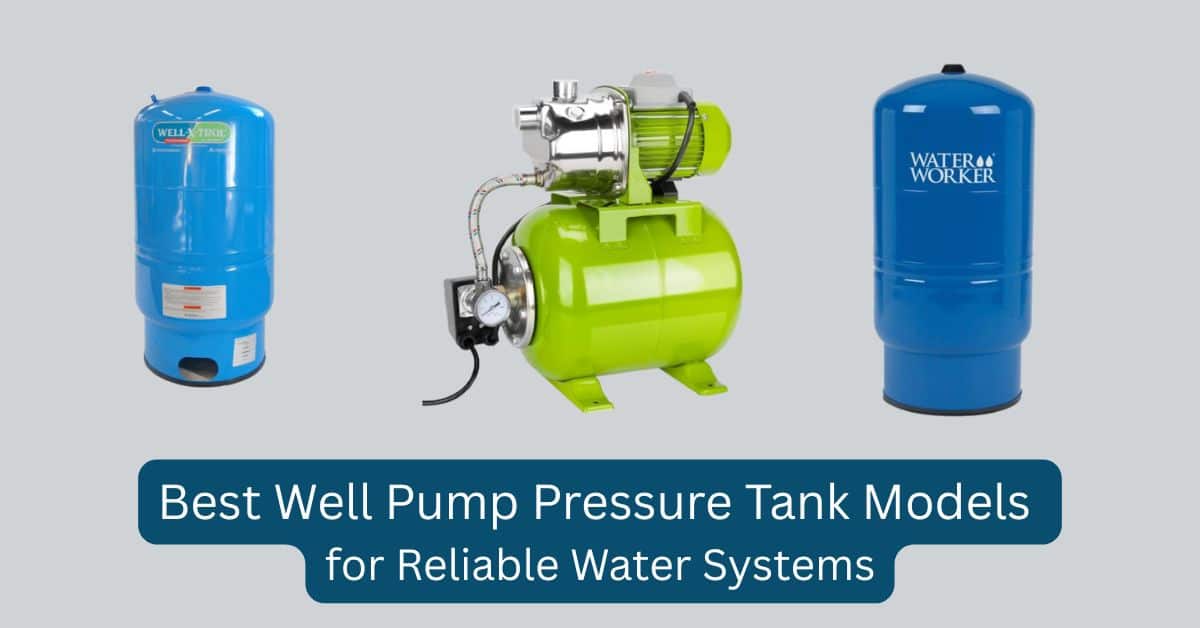
A pressure tank works with your well pump to maintain consistent water pressure throughout your plumbing system. Pressure tanks store pressurized water and reduce how often your well pump turns on and off.
When you turn on a faucet, the tank releases stored water first before the pump kicks in to refill it. This system protects your pump from excessive wear while ensuring you have water pressure when you need it.
The tank contains a bladder or diaphragm that separates water from compressed air to maintain proper pressure levels. Tank size and pre-charge pressure are the most important factors when choosing a pressure tank.
The tank must be large enough to meet your household’s water demands without causing the pump to cycle too frequently. Pre-charge pressure should match your system’s cut-in pressure to work properly with your pressure switch.
Best Well Pump Pressure Tanks
I compared manufacturer specifications, tank size, pre-charge details, construction materials, and published product information to identify strong pressure tank options for different water systems.
WaterWorker 20-Gallon Vertical Well Tank

Best for most homes with 6-7 water fixtures because it offers great pump protection and takes up minimal space.
Key specs: 20-gallon vertical tank (WaterWorker HT20B); 15” × 32” (Water Worker HT-20B listing, ToolBox Supply); NSF/ANSI 61 listed (Water Worker — Well Tanks and Expansion Tanks catalog, PDF)
Pros
- Dramatically reduces pump cycling compared to older galvanized tanks
- Takes up much less space than traditional tanks with the same water capacity
- Never experiences water-logging issues thanks to the sealed diaphragm design
Cons
- Cannot be returned once purchased due to hazmat shipping rules
- May be too small for larger homes with many water outlets
- Requires careful pressure adjustment during installation
WaterWorker HT-30B Vertical Pressure Tank

Best for most homeowners because it reduces pump cycling and maintains steady water pressure better than older galvanized tanks.
Key specs: WaterWorker HT-30B vertical tank, 26-gallon listed capacity; NSF/ANSI 61 listed; 5-year warranty (Water Worker — Well Tanks and Expansion Tanks catalog, PDF)
Pros
- Diaphragm design prevents waterlogging issues that plague traditional tanks
- Compact size delivers three times the drawdown capacity of similar-sized galvanized tanks
- Butyl composite diaphragm flexes smoothly without stretching or creasing
Cons
- Some units arrive with shipping damage due to inadequate packaging
- Installation fittings may show rust right out of the box
- Tank takes up significant vertical space at 39 inches tall
FOTING 1.5HP Shallow Well Pump

Best for basic water supply needs.
Key specs: 1.5 HP shallow-well pump; up to 1340 GPH (about 22 GPM); max lift about 164 ft; 115 V (FOTING 1.5HP Shallow Well Pump listing, Amazon)
Pros
- Strong motor moves water up to 150 feet with excellent flow rates
- Built-in pressure tank and gauge make monitoring water pressure simple
- Lightweight design with carrying handle makes it easy to move around
Cons
- Needs priming every single time before use which gets annoying
- Short power cord limits where you can place the pump
- No standard tap connectors included for basic setups
Aquastrong 1.6 HP Shallow Well Pump

Best for shallow-well setups that need a packaged pump option.
Key specs: 1.6 HP 115 V shallow-well jet pump; max flow 1340 GPH (about 22 GPM); max head 164 ft; built-in 5-gallon pressure tank; pressure switch cuts in at 20 psi and out at 40 psi; 2-year warranty (Aquastrong 1.6 HP Shallow Well Pump listing, Amazon)
Pros
- Strong suction power handles water lifting up to 26 feet without losing pressure
- Built-in pressure switch and 5-gallon tank provide automatic operation and longer pump life
- Stainless steel construction resists rust and corrosion in outdoor conditions
Cons
- Some units fail after limited use or arrive damaged from the factory
- Pressure switch settings cannot be easily adjusted for different applications
- Occasional motor shutdowns occur during heavy-duty pumping tasks
Red Lion RL20A Pressure Tank

Best for homeowners who need reliable water pressure and don’t mind doing some initial setup work.
Key specs: 20-gallon vertical tank (RL20A); the listing states a 7.2-gallon drawdown at 30/50 psi; factory pre-charged to 20 psi; 20-gauge steel shell with 304 stainless steel connection; 1” FNPT elbow connection (Red Lion RL20A listing, Amazon)
Pros
- Handles six water fixtures running at the same time without pressure drops
- Heavy-duty steel construction with stainless steel connections resists corrosion
- Thermoplastic base keeps the tank off the floor and prevents condensation damage
Cons
- Requires manual air pressure adjustment with a bicycle pump during setup
- Some units arrive with dents or shipping damage
- Takes up significant floor space at 27 inches tall
LANCHEZ 1.6HP Shallow Well Pump with Tank

Best for homeowners who need reliable water pressure.
Key specs: 1.6 HP 115 V pump; max flow about 22 GPM (1340 GPH); built-in 5-gallon pressure tank; pressure switch cuts in at 20 psi and out at 40 psi; 3-year warranty (LANCHEZ 1.6HP Shallow Well Pump listing, Amazon)
Pros
- Strong water flow delivers consistent pressure for household needs
- Built-in safety features prevent damage from overheating
- Complete package includes everything needed for installation
Cons
- Limited to shallow wells only, not deep water sources
- Tank size might be too small for larger homes
- Initial priming process can be tricky for beginners
Amtrol WX-202 Well Tank

Best for most homes.
Key specs: Amtrol WX-202 20-gallon well tank, 15” × 32”; steel shell with polypropylene liner; factory pre-charged to 38 psi; rated to 150 psig max working pressure; 6.2-gallon drawdown at 30/50 psi; 7-year limited warranty (Amtrol WX-202 Well-X-Trol tank, Aqua Science)
Pros
- Takes up minimal floor space while providing reliable water pressure
- Butyl diaphragm and polypropylene liner resist corrosion better than basic tanks
- Welded air valve prevents the frustrating pressure loss you’ve seen with threaded versions
Cons
- Blue finish shows dirt and scratches more easily than darker colors
- Pre-set pressure may need adjustment depending on your pump switch settings
- Compact size means less water storage compared to larger tanks
Acquaer 1.6 HP Shallow Well Pump

Best for homeowners who need reliable water pressure.
Key specs: 1.6 HP 115 V shallow-well jet pump; max flow 1340 GPH; max head 165 ft; 2-year warranty (Acquaer 1.6 HP Shallow Well Pump listing, Amazon)
Pros
- Strong motor delivers excellent water flow for garden and lawn irrigation needs
- Built-in safety features prevent costly motor damage from overheating or dry running
- Stainless steel construction resists rust and corrosion in outdoor conditions
Cons
- Requires manual priming before each use which adds extra steps to startup
- Weighs nearly 40 pounds making it challenging to move around frequently
- Limited to shallow wells only which restricts installation options
Amtrol Well-X-Trol Stand Tank

Best for most homes.
Key specs: Amtrol WX-203 32-gallon stand tank, 15” × 47”; steel shell with polypropylene liner; factory pre-charged to 38 psi; rated to 150 psig max working pressure; 9.9-gallon drawdown at 30/50 psi; 7-year limited warranty (Amtrol WX-203 Well-X-Trol tank, Aqua Science)
Pros
- Strong steel shell and liner system handles daily pressure cycles well
- Easy installation with clear connection points and manageable weight
- Reliable water pressure delivery for typical household needs
Cons
- Some units arrive with dents or cosmetic damage from shipping
- Quality may not match the durability of older Amtrol models
- Higher price point compared to similar capacity tanks
COWEHUN 1HP Shallow Well Pump

Best for homeowners who need reliable water pressure.
Key specs: 1 HP 115 V shallow-well jet pump; max flow 845 GPH; max lift 124 ft; pressure switch cuts in around 21.8 psi and out around 43.5 psi (COWEHUN 1HP Shallow Well Pump listing, Amazon)
Pros
- Built-in pressure tank saves space and simplifies setup
- Stainless steel construction resists rust and weather damage
- Automatic pressure controls start and stop without manual input
Cons
- High flow rate can overwhelm single fixtures like shower heads
- Limited customer feedback makes long-term reliability unclear
- May require additional outlets to balance water pressure properly
Atdsetr Well Pressure Tank Tee Kit

Best for DIY installations that need a pressure tank kit with bundled components.
Key specs: the listing states a 40/60 psi pressure switch; 100 psi pressure gauge; 11” tee; fits tanks up to 16” in diameter; 1” NPT × 3/4” NPT lead-free brass fitting (Atdsetr Well Pressure Tank Tee Kit listing, Amazon)
Pros
- Complete kit includes all necessary components for immediate installation
- Lead-free brass construction resists corrosion and provides long-term durability
- Compatible with tanks up to 16 inches in diameter with versatile threading options
Cons
- Pressure switch may need additional fittings depending on tank size
- Threading quality can be inconsistent on some components
- Missing check valve that would improve overall system performance
Hanchen 3/4 HP Shallow Well Pump

Best for shallow well applications.
Key specs: 0.75 HP (3/4 HP) jet pump; stainless-steel head; self-priming; with pressure tank; 13” L × 6” W × 11” H; 14.5 lb (Hanchen 3/4 HP Shallow Well Pump listing, Amazon)
Pros
- Automatically starts and stops based on water flow, making operation effortless
- Stainless steel construction prevents rust and ensures clean water
- Self-priming feature eliminates the hassle of manual priming
Cons
- Pressure switch may need adjustment for optimal performance
- Mid-range noise level during operation
- Compact size might limit flow capacity for larger applications
Pisumsativum 1HP Shallow Well Pump

Best for users who need reliable water pressure and don’t mind the higher power consumption.
Key specs: 1 HP jet pump; built-in 5-gallon pressure tank; max lift 130 ft; 20 ft suction depth; pressure switch cuts in at 19 psi and out at 38 psi; 2-year warranty (Pisumsativum 1HP Shallow Well Pump listing, Amazon)
Pros
- Strong motor delivers consistent water flow with excellent lifting power
- Built-in safety features protect against dry running and overheating
- Quick setup process with all necessary fittings included
Cons
- Higher electricity usage compared to smaller pumps
- Takes up more space than compact models
- Initial priming requires extra time and attention
Buying Guide
Tank size on the label isn’t the number that decides how your pump behaves — drawdown is. Drawdown is the volume of water a tank actually releases before the pump has to switch back on, and it moves with pre-charge pressure as much as with gallons: among the 20-gallon tanks in this list, the Red Lion RL20A is factory pre-charged to 20 psi and posts a 7.2-gallon drawdown at a 30/50 psi switch setting, while the Amtrol WX-202 is pre-charged to 38 psi and posts 6.2 gallons at that same switch setting. Every tank here uses a bladder or diaphragm to keep that pre-charged air separated from your water, and that pre-charge has to be matched to your own pressure switch’s cut-in point, not left at the factory number — get it wrong and the tank does less of the work, so your pump short-cycles more and wears out sooner.
Tank Size
Compare usable drawdown rather than nominal gallons. The page’s two 20-gallon examples illustrate the difference: the Red Lion RL20A lists 7.2 gallons at 30/50, while the Amtrol WX-202 lists 6.2 gallons at the same switch setting.
Pressure Rating
Match the tank to the pump switch, commonly 30/50 or 40/60. The first number is cut-in pressure, when the pump starts; the second is cut-out pressure, when it stops and the tank is full again.
Construction Materials
Steel tanks offer a lower-cost shell but need protection against corrosion, while fiberglass avoids rust at a higher purchase price. Composite construction is another corrosion-resistant option; compare the protective lining and service access as well as the exterior material.
Pre-Charge Pressure
Set the air pre-charge to the pressure switch’s cut-in arrangement before putting the tank into service. Leaving a 20 psi or 38 psi factory setting unchanged when the switch calls for something else reduces drawdown and can bring back short cycling.
Warranty and Certifications
Compare the 5-10 year warranty range shown here with the parts actually covered, then check the applicable NSF drinking-water standard. Pump compatibility still depends on pressure range and connection layout, not brand name alone.
Frequently Asked Questions
How do pump flow and pressure-switch settings determine pressure-tank drawdown?
Start with the pump’s flow rate and the peak demand from fixtures and appliances that may run together. Then compare tank drawdown at the actual cut-in and cut-out settings so the pump gets an adequate rest between starts.
The pump’s flow rate determines the minimum tank size you need. A 10 GPM pump typically requires at least a 20-gallon tank.
Your pressure switch settings affect tank performance. Higher pressure differentials allow smaller tanks to work effectively.
Adding a margin above the calculated size can help prevent undersizing issues as water usage grows.
How often should I replace my well pump pressure tank for optimal performance?
Most pressure tanks last 8 to 12 years with proper maintenance. Actual lifespan depends on cycling frequency, water quality, and bladder design.
The bladder inside typically fails before the tank itself. Steel tanks may develop rust after 6 to 8 years in areas with high humidity.
Annual checks for wear are a common maintenance step. That includes testing air pressure and inspecting for corrosion.
Water quality affects tank life significantly. Hard water or high iron content can reduce the lifespan by 2 to 3 years.
Can you explain how to properly set up a new pressure tank in a well pump system?
Set up begins with turning off power to the pump and draining the old system. Safety comes first in any installation.
The new tank needs proper air pressure before connecting to water lines. A common target is 2 PSI below the pressure switch cut-in pressure.
The tank should sit on a level, stable surface near the pressure switch. It also needs to remain accessible for future maintenance.
All connections require pipe thread compound or Teflon tape. Leak checks should happen before restoring power to the system.
What are the signs that indicate my pressure tank may be failing and requires attention or replacement?
Short pump cycles are one of the most common early warning signs. The pump turns on and off rapidly instead of running steadily.
Water hammering in pipes indicates bladder failure inside the tank. You might hear banging sounds when faucets turn off quickly.
Waterlogged tanks lose their ability to maintain pressure. The gauge drops quickly after the pump stops running.
Rust stains around the tank base suggest internal corrosion. This typically means the steel tank needs immediate replacement.
How does the quality of different brands like Amtrol and Water Worker compare for well pressure tanks?
Amtrol tanks use a heavy-duty butyl rubber bladder that resists bacteria growth. That material is commonly marketed as longer-lasting than standard rubber versions.
Water Worker tanks feature a polypropylene liner that prevents corrosion. Their steel construction typically handles higher pressures well.
Amtrol tanks cost 15% to 20% more than Water Worker models. The price difference reflects the premium bladder materials used.
Amtrol’s Well-X-Trol residential tanks carry a 7-year limited warranty, while Water Worker’s residential tanks carry a 5-year warranty. Choice should come down to pressure rating, drawdown capacity, and tank dimensions.
What is the process for troubleshooting common issues with well pump pressure tanks?
Troubleshooting usually starts with checking the air pressure in the tank using a tire gauge. Low air pressure causes many performance problems.
The pressure switch may need adjustment if cycles are too short or long. Check the cut-in and cut-out pressures during operation.
Inspect all pipe connections for leaks that reduce system pressure.
A waterlogged tank may require bladder replacement or complete tank replacement. One common check is tapping the tank sides and comparing hollow and solid sections.

Thomas Peterson
Owner WSA
About the Author
Latest Posts
Born and raised in Nanaimo on Vancouver Island. Thomas gained a deep appreciation for the importance of clean, reliable water. With over 15 years of experience working with water treatment systems, Thomas has become a trusted expert in helping local homeowners and businesses resolve the unique challenges of well water across the Island.
From hard water and iron buildup to low water pressure and sediment issues, Thomas takes a practical, no-nonsense approach to solving water problems. Whether it’s installing filtration systems or troubleshooting well pump issues, Thomas focuses on long-lasting solutions that help people get the clean, safe water they need.
As a proud local professional, Thomas is dedicated to serving his community with honesty, quality service, and expert advice tailored to the water conditions of Vancouver Island.
Areas of Expertise: Well Service, Well Pumps, Water Filtration Systems
- Clack Water Softener Alternatives: Top Systems for Hard Water Treatment in 2025 November 8, 2025
- Best Well Water Test Kit Options for Safe Home Water Testing in 2025 November 5, 2025
- Best Well Water TDS Meter for Accurate Home Testing in 2025 November 1, 2025
- Best Well Water Sediment Filter Systems for Clean Home Water in 2025 October 29, 2025
- Best Well Water Saltless Water Softener Systems for 2025 October 26, 2025
Facebook Twitter LinkedIn Instagram Reddit
Fact Checked & Editorial Guidelines
The Fact Checking Process
I prioritize accuracy and integrity in my content. Here’s how I maintain high standards:
- Expert Review: All articles are reviewed by subject matter experts.
- Source Validation: Information is backed by credible, up-to-date sources.
- Transparency: I clearly cite references and disclose potential conflicts.
Your trust is important. Learn more about my fact checking process and editorial policy.
Reviewed by: Subject Matter Experts
The Review Board
The content is carefully reviewed by experienced professionals to ensure accuracy and relevance.
- Qualified Experts: Each article is assessed by specialists with field-specific knowledge.
- Up-to-date Insights: I incorporate the latest research, trends, and standards.
- Commitment to Quality: Reviewers ensure clarity, correctness, and completeness.
Look for the expert-reviewed label to read content you can trust.