
Best Well Water Chlorine Filter – Remove Chlorine
Compare well water chlorine filters in 2025 using published chlorine-reduction claims, filter media, and whole-house system specifications.

Affiliate disclosure: Some links on this page are affiliate links. If you click an affiliate link and make a purchase, I may earn a small commission at no extra cost to you. I only recommend products I believe are useful to readers.
Chlorine in a private well is usually there because of shock treatment, storage, or an intentional disinfection step—not because groundwater arrives chlorinated. The equipment choice therefore depends on whether the job is to add a sanitizer or remove its residual taste and odour afterward.
While chlorine can play a role in disinfection, many homeowners want a dedicated filter to reduce residual chlorine after treatment.
A chlorine filter specifically designed for well water removes these chemicals while preserving beneficial minerals that naturally occur in groundwater. These filters work differently than standard water filters because they target chlorine and chloramines without over-filtering the water.
Well water chlorine filters typically use activated carbon or other specialized media to capture and neutralize chlorine compounds as water flows through your system.
The most important factors to consider when choosing a well water chlorine filter include the filter’s capacity, flow rate, and replacement schedule. Capacity determines how much water the filter can treat before needing replacement, while flow rate affects water pressure throughout your home.
Some filters require monthly changes while others last six months or longer.
Best Well Water Chlorine Filters
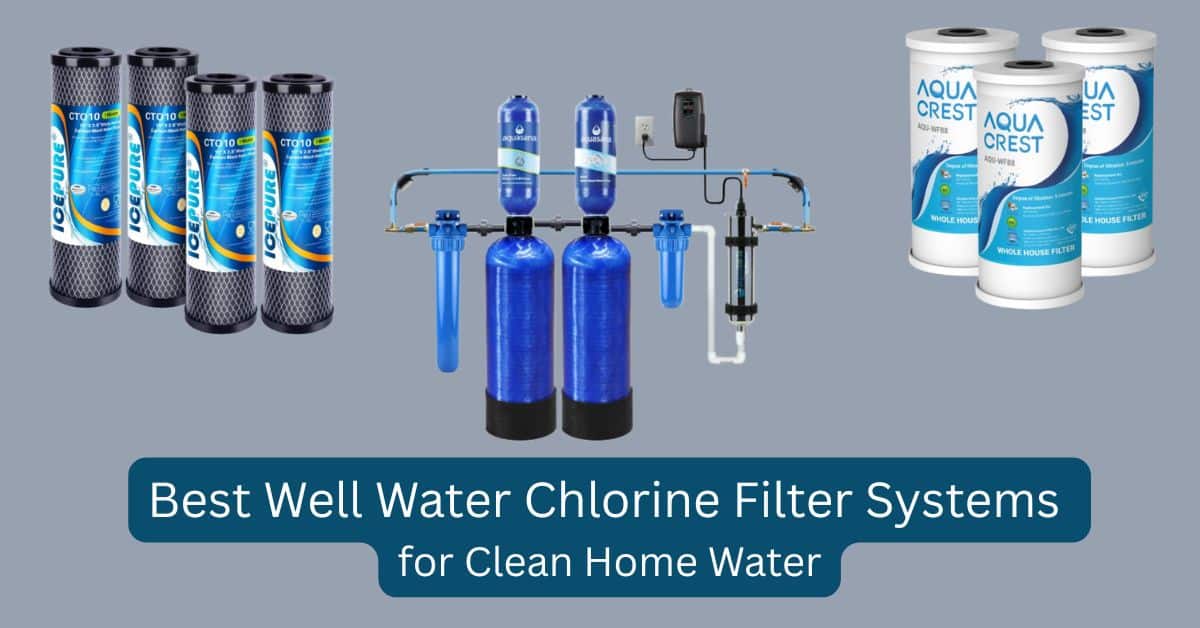
Below is my complete list of the best well water chlorine filters. I compared published chlorine-reduction claims, flow-rate specs, filter media, and maintenance requirements to help match each option to the right use case.
Well Safe Sanitizer Kit

Best for well owners who need a simple solution to kill bacteria and eliminate sulfur odors.
Key specs: chlorine tablet well-sanitizer kit; calcium-hypochlorite pellets; listed under NSF/ANSI/CAN 60 per the NSF certifier listing, USDA food-grade; 16 oz; treat quarterly (every 3 months) (Well Safe listing on Amazon) (NSF – Better Water Industries NSF/ANSI/CAN 60 listing)
Pros
- Works quickly to eliminate rotten egg smell and kill harmful bacteria in just 8-24 hours
- Simple DIY process that doesn’t require professional installation or maintenance calls
- USDA and NSF certified pellets provide safe water treatment for drinking water systems
Cons
- Temporary solution that needs repeating every 3-6 months for ongoing water quality
- Requires flushing the entire well system until water runs clear after treatment
- Strong chlorine smell during treatment process can be overwhelming
iSpring WGB32BM Iron Pro

Best for well water owners dealing with iron and manganese issues who want reliable whole house filtration.
Key specs: 100,000-gallon capacity; peak flow 15 GPM; working pressure 25-80 psi; 1” NPT ports; 3-stage design with 5-micron sediment; 1-year limited warranty (iSpring WGB32BM listing on Amazon)
Pros
- Effectively removes iron up to 3 ppm and manganese up to 1 ppm from well water
- Long-lasting filters provide 100,000 gallons of capacity for about one year of family use
- Simple installation process with clear instructions and helpful video guides
Cons
- Takes up significant space at 28 inches tall and weighs 55 pounds when installed
- Does not reduce total dissolved solids so mineral content remains high
- Requires regular filter changes which can become expensive over time
iSpring WGB21B 2-Stage System

Best for well water owners who need reliable chlorine removal and sediment filtering.
Key specs: 2-stage (WGB21B); 50,000-gallon capacity; first stage 5-micron sediment, second stage CTO carbon (90%+ chlorine reduction); 1” inlet/outlet; 30-day money-back and 1-year warranty (iSpring – WGB21B 2-Stage Whole House Water Filtration System)
Pros
- Removes over 90% of chlorine while keeping beneficial minerals in the water
- Installation process is straightforward with pre-assembled mounting bracket and included tools
- Filters last up to one year or 50,000 gallons for average households
Cons
- Filter changes require some physical effort to handle the large cartridges
- Takes up considerable space with its 26-inch length
- Water pressure can drop noticeably when sediment filter gets clogged
Waterdrop Whole House Water Filter

Best for well water owners dealing with high iron and chlorine because it delivers solid filtration results and installs easily.
Key specs: 2-stage, 5-micron; 50,000-gallon capacity (up to 6 months); 1” inlet/outlet (Waterdrop WHF21-FG listing on Amazon); flow up to 15 GPM; reduces iron; manufacturer states up to 98.9% manganese and 95.6% chlorine reduction; 1-year warranty (Waterdrop – WHF21-FG Whole House Water Filter)
Pros
- Manufacturer states up to 95.6% chlorine reduction, plus iron and manganese removal
- Six-month filter life saves money on frequent replacements
- Simple DIY installation with clear instructions and included tools
Cons
- Some units arrive with leaking issues that require replacement
- Teflon tape application is tricky and affects system longevity
- Pressure release button may drip for the first day after installation
AO Smith Whole House Filter

Best for well water households that want cleaner water from every tap.
Key specs: AO Smith AO-WH-Filter whole-house carbon filter; rated for 600,000 gallons / 6 years; removes 96.9% of chlorine taste and odor (A. O. Smith – AO-WH-FILTER Whole House Water Filter); activated-carbon media; flow rate 7 GPM; 29” H × 9” W × 9” D tank (A. O. Smith – AO-WH-Filter at Lowe’s)
Pros
- Removes 96.9% of chlorine taste and smell from all water sources
- Filter lasts six years without needing replacement or backflushing
- Installation takes just a few hours with basic tools
Cons
- Cannot handle iron, sulfur, or hard water minerals
- Flow rate drops during peak usage times
- Initial cost is higher than standard cartridge systems
WaterBoss Whole House Filter

Best for homeowners who want reliable chlorine removal.
Key specs: WaterBoss whole-house filter (WB-WH-Filter); rated 600,000 gallons / 6 years; 7 GPM rated continuous flow; operating pressure 25-80 psi; NSF/ANSI 42; removes up to 96.9% chlorine taste and odor (WaterBoss – Whole House Water Filter) (NSF – WaterBoss certified product listing)
Pros
- Removes up to 96.9% of chlorine taste and odor with certified performance
- Maintains strong water pressure at 7 gallons per minute throughout the house
- Simple installation process that most homeowners can handle themselves
Cons
- Won’t make heavily contaminated well water crystal clear like some expect
- Initial carbon dust requires thorough flushing before first use
- Limited filtration beyond chlorine, taste, and odor removal
ICEPURE CTO Carbon Filter 4-Pack

Best for buyers comparing chlorine-focused cartridge replacements for treated water systems.
Key specs: 1-micron CTO carbon cartridges; 2.5” × 10”; up to 13,000 gallons; 4-pack (ICEPURE listing on Amazon)
Pros
- Removes 99% of chlorine and improves water taste significantly
- Compatible with many popular whole house filter systems
Cons
- Not designed for well water with heavy sediment loads
- May clog quickly with muddy or sandy water sources
- Requires replacement every 6 months for best results
AQUA CREST FXHTC Filter 3-Pack

Best for budget-conscious homeowners who need reliable chlorine removal.
Key specs: 5-micron carbon cartridges (FXHTC format); flow up to 4 GPM; up to 30,000 gallons / 3-6 months; 10” × 4.5”; 3-pack (AQUA CREST listing on Amazon)
Pros
- Three filters per pack
- Works with many popular whole house systems without compatibility issues
- Maintains strong water pressure while removing chlorine taste and odors
Cons
- Filter housing feels lighter than original equipment parts
- Some users report shorter lifespan than advertised 6-month duration
- Installation instructions could be more detailed for first-time users
iFilters 2-Stage Whole House System

Best for most homes.
Key specs: iFilters 2-stage whole-house system (LWH-D); 3/4” NPT ports; sediment and coconut-shell activated-carbon media; 3.54 kg complete (iFilters LWH-D listing on Amazon)
Pros
- Sized for small to medium households based on its stated cartridge capacity and flow claims
- Easy filter changes thanks to the pressure relief button on top
- Protects appliances from sediment damage while providing decent flow rates
Cons
- Housing feels somewhat flimsy and prone to developing leaks over time
- Threading requires extra Teflon tape to seal properly during installation
- Filter compatibility is limited to specific replacement cartridges only
Aquasana Whole House Well Water Filter

Best for well water owners who need comprehensive filtration with UV sterilization and scale control in one package.
Key specs: rated for 500,000 gallons; flow up to 14.7 GPM; KDF (copper-zinc) + carbon media with UV; salt-free scale prevention; 5-year limited warranty; 57” H × 11” diameter tank (Aquasana – Rhino Well Water with UV) (Aquasana listing on Amazon)
Pros
- Multi-stage filtration removes bacteria, viruses, and chlorine effectively
- Salt-free water conditioning prevents scale without adding sodium
- Long-lasting filters handle 500,000 gallons over five years
Cons
- Large size requires significant installation space and planning
- Water pressure drops noticeably after installation
- Does not truly soften water like traditional salt-based systems
PUREPLUS 5 Micron Carbon Filter

Best for homes with treated tap water. It’s not the best choice for well water systems.
Key specs: 5-micron 10” × 4.5” sediment + carbon cartridges; up to 30,000 gallons; replace every 3-6 months; 2-pack (PUREPLUS listing on Amazon)
Pros
- Easy installation that fits perfectly into standard 10-inch housings without any tools or adjustments
- Multi-layer design with coconut shell carbon removes chlorine taste and odor effectively
- Cartridges last 3-6 months depending on usage
Cons
- Not designed for well water and may not filter out bacteria or other well-specific contaminants
- Only handles basic sediment and chlorine removal, not comprehensive water treatment
- Discontinued by manufacturer which could affect future availability
H&G Lifestyles 3-Stage Filter

Best for homes that need a whole-house system addressing both chlorine and iron.
Key specs: 3-stage whole-house filter (PP sediment, KDF, and iron/manganese cartridges); two 1” brass barb fittings; the listing states 4.5” × 20” cartridges, a 22.8” L × 8.7” W × 24.8” H frame, flow up to 15 GPM, a rated capacity of up to 100,000 gallons, and a 46.9 lb weight; no power required (H&G Lifestyles listing on Amazon)
Pros
- Three different filters work together to tackle multiple water problems at once
- Installation was straightforward with all the fittings included in the box
- Water pressure stays strong even with all three stages running
Cons
- Only three customer reviews available, so track record is unclear
- Large size requires significant wall space for mounting
- Filter replacements will add up over time with three cartridges to maintain
Stokk UC50 Under Sink Filter

Best for under-sink chlorine reduction with a compact, lower-complexity install.
Key specs: Stokk UC50 under-sink filter; 0.5-micron filtration; max flow 1.6 GPM; 26,000-gallon service life (replace every 24 months) (Stokk UC50 listing on Amazon, archived October 14, 2025)
Pros
- Quick 3-minute installation with twist-and-pull filter changes
- Removes chlorine taste and odor effectively from well water
- Long 26,000-gallon filter life reduces replacement costs
Cons
- Plastic construction feels less durable than metal alternatives
- Water inlet fittings can come loose without proper securing
- Basic single-stage filtration may miss some well water contaminants
Buying Guide
Chlorine turns up in well water either as a lingering residual from shock-chlorinating the well after service or storage, or by design, as with the calcium-hypochlorite sanitizer kit listed first above, which is dosed quarterly to kill bacteria and sulfur odour rather than filtered back out. Every other pick on this list does the opposite job — pulling chlorine taste and odour out with activated carbon — and their stated reduction numbers vary by media and stage count, from the iSpring WGB21B’s 90%+ carbon stage up to the AO Smith and WaterBoss units’ listed 96.9%. These carbon and cartridge filters target taste and odour, not disinfection; killing bacteria at the source is the sanitizer kit’s job, not theirs. Match the media’s rated capacity, in gallons or years, to how much water your household actually runs through it before choosing between a cartridge and a tank system.
Flow Rate Requirements
Use household water demand to check the whole-house rating at simultaneous use, not only daily volume. The 10-15 GPM range used here needs to cover busy periods; a smaller carbon stage can become the pressure bottleneck.
Filter Capacity and Lifespan
The carbon-system capacities discussed here range from about 100,000 to 1,000,000 gallons, so translate the rating into years using actual household use. Chlorine concentration and sediment loading can shorten that interval even when the nominal tank size is large.
Key capacity factors:
- Number of people in household
- Daily water usage
- Chlorine levels in well water
Installation Requirements
A tank or large cartridge on the main line may justify professional installation because it needs isolation valves, adequate pipe size, and service clearance. A point-of-use carbon cartridge treats one tap and has a smaller plumbing footprint.
Maintenance Needs
Match the service plan to the media: the table below puts carbon block at 6-12 months, granular carbon at 3-6 months, and reverse-osmosis components at 6-24 months. Those intervals are more useful for budgeting than a vague low-maintenance label.
| Filter Type | Maintenance Frequency | Difficulty Level |
|---|---|---|
| Carbon Block | 6-12 months | Easy |
| Granular Carbon | 3-6 months | Easy |
| Reverse Osmosis | 6-24 months | Medium |
Certification Standards
Check whether NSF International or the Water Quality Association certified the exact chlorine-reduction claim for the model being considered. A certification for material safety alone does not establish the listed reduction percentage or service capacity.
Frequently Asked Questions
Well water chlorine filters require specific knowledge about effectiveness, maintenance, and system types. These filters address unique challenges like contaminant removal and appliance protection.
When should a well use activated carbon after shock chlorination rather than a sanitizer?
Use activated carbon when the disinfection step is complete and the goal is to reduce residual chlorine taste and odour. The calcium-hypochlorite kit on this page serves the opposite role by dosing the well for bacteria and sulfur odour; it is not a chlorine-removal filter.
Granular activated carbon (GAC) filters are commonly used for chlorine reduction. They often cost less than carbon block filters but may need more frequent replacement.
Catalytic carbon filters handle chloramines better than regular carbon filters. They work well if your well water has both chlorine and chloramines.
How do whole-house chlorine filtration systems compare to point-of-use filters for well water?
Whole-house systems filter all water entering your home. They protect appliances and provide filtered water to every faucet and shower.
Point-of-use filters only treat water at specific locations like kitchen sinks. They cost less upfront but don’t protect your entire water system.
Whole-house systems require higher initial investment and professional installation. Point-of-use filters are easier to install and maintain yourself.
What are the maintenance requirements for a chlorine filtration system in a well water setup?
Carbon filters need replacement every 6 to 12 months depending on water usage. High chlorine levels may require more frequent changes.
Monthly spot checks can help confirm filter performance after chlorination events or heavy use. Replace filters according to capacity limits or when chlorine readings rise again.
Professional maintenance visits once per year help ensure optimal system performance. Technicians can check system pressure and flow rates.
Can a chlorine filter for well water also remove other contaminants such as heavy metals and bacteria?
Basic carbon filters remove chlorine but not heavy metals or bacteria. You need multi-stage filtration systems for broader contaminant removal.
Some systems combine carbon filters with reverse osmosis membranes. These remove heavy metals, bacteria, and many other contaminants.
UV light systems can kill bacteria when paired with carbon filters. This combination addresses both chlorine and biological contaminants.
How does the presence of chlorine in well water affect household appliances, and can filters mitigate this?
Chlorine damages rubber seals and gaskets in appliances like dishwashers and washing machines. It also corrodes metal components over time.
Water heaters suffer from chlorine exposure through accelerated tank corrosion. This leads to shorter appliance lifespan and higher replacement costs.
Whole-house chlorine filters protect all appliances by removing chlorine before it enters your plumbing system. This extends appliance life significantly.
What are the signs that indicate the need to replace or upgrade a well water chlorine filtration system?
Strong chlorine taste or smell in filtered water means your filter needs replacement. This usually happens before the recommended replacement schedule.
Reduced water pressure often indicates clogged filters. Replace filters immediately when you notice pressure drops.
Skin irritation or dry hair after showering can signal filter failure. These symptoms return when chlorine removal becomes ineffective.

Thomas Peterson
Owner WSA
About the Author
Latest Posts
Born and raised in Nanaimo on Vancouver Island. Thomas gained a deep appreciation for the importance of clean, reliable water. With over 15 years of experience working with water treatment systems, Thomas has become a trusted expert in helping local homeowners and businesses resolve the unique challenges of well water across the Island.
From hard water and iron buildup to low water pressure and sediment issues, Thomas takes a practical, no-nonsense approach to solving water problems. Whether it’s installing filtration systems or troubleshooting well pump issues, Thomas focuses on long-lasting solutions that help people get the clean, safe water they need.
As a proud local professional, Thomas is dedicated to serving his community with honesty, quality service, and expert advice tailored to the water conditions of Vancouver Island.
Areas of Expertise: Well Service, Well Pumps, Water Filtration Systems
- Clack Water Softener Alternatives: Top Systems for Hard Water Treatment in 2025 November 8, 2025
- Best Well Water Test Kit Options for Safe Home Water Testing in 2025 November 5, 2025
- Best Well Water TDS Meter for Accurate Home Testing in 2025 November 1, 2025
- Best Well Water Sediment Filter Systems for Clean Home Water in 2025 October 29, 2025
- Best Well Water Saltless Water Softener Systems for 2025 October 26, 2025
Facebook Twitter LinkedIn Instagram Reddit
Fact Checked & Editorial Guidelines
The Fact Checking Process
I prioritize accuracy and integrity in my content. Here’s how I maintain high standards:
- Expert Review: All articles are reviewed by subject matter experts.
- Source Validation: Information is backed by credible, up-to-date sources.
- Transparency: I clearly cite references and disclose potential conflicts.
Your trust is important. Learn more about my fact checking process and editorial policy.
Reviewed by: Subject Matter Experts
The Review Board
The content is carefully reviewed by experienced professionals to ensure accuracy and relevance.
- Qualified Experts: Each article is assessed by specialists with field-specific knowledge.
- Up-to-date Insights: I incorporate the latest research, trends, and standards.
- Commitment to Quality: Reviewers ensure clarity, correctness, and completeness.
Look for the expert-reviewed label to read content you can trust.